Vector Network Analyzers
SYVNA-1P-20G-ASingle-Port Vector Network Analyzer
The SYVNA-1P-20G-A is a low-cost, high-performance, compact single-port VNA covering 10 MHz to 20 GHz. It is small enough…
View product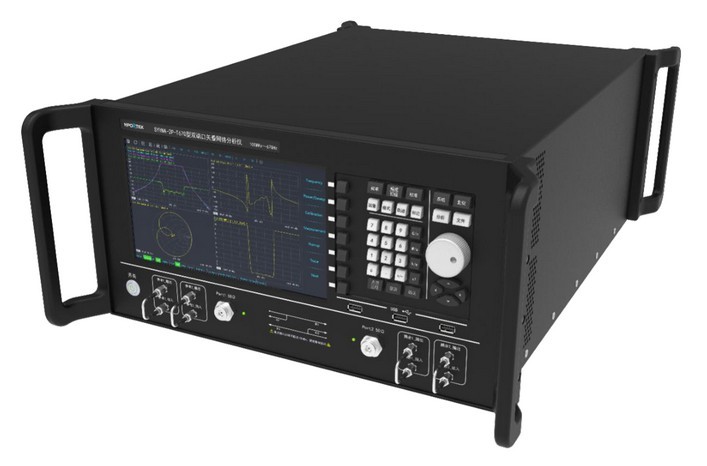
Vector Network Analyzers
The SYVNA-2P-T67G is a low-cost, high-performance, compact bench-top dual-port VNA covering 100 MHz to 67 GHz, with open interfaces for secondary development.
TECHNICAL DATA
Specifications correspond to the product catalogue. Contact our technical team for configuration and operating conditions.
| Parameter | Specification / typical value |
|---|---|
| Functional Specifications | |
| Independent S-parameter measurement | Supported |
| Swept/fixed-frequency modes; time-domain analysis (cable fault distance, reflection distance) | Supported |
| Friendly display & control software | Supported |
| Technical Specifications | |
| Frequency Range | 100MHz~67GHz |
| Frequency Accuracy | ±5×10⁻⁶ |
| Frequency Resolution | 50Hz |
| Output Power | -50dBm~0dBm |
| Sweep Points | 2 to 100001 points |
| IF Bandwidth | 10Hz~300kHz |
| Dynamic Range | ≥100dB |
| Transmission Coeff. Accuracy | ±0.2dB/±2°(0dB~10dB);±0.1dB/±2°(-45dB~ 0dB);±0.2dB/±2°(-65dB~-45dB);±1dB/±6°(- 70dB~-65dB) |
| Reflection Coeff. Accuracy | ±0.5dB/±4°(-15dB~0dB);±1.5dB/±10°(-25dB~- 15dB);±5.5dB/±30°(-35dB~-25dB) |
| Trace Noise | 0.004dBrms |
| Temperature Dependency | 0.04dB/℃ |
| Effective Directivity | 35dB |
| Effective Source Match | 30dB |
| Effective Reflection Tracking | ±0.5dB |
| Effective Load Match | 28dB |
| Effective Transmission Tracking | ±0.5dB |
| Burn-out Power | +25dBm |
| Ext. Ref. Frequency | 20MHz |
| Ext. Ref. Power | 0dBm~5dBm |
| Output Ref. Frequency | 20MHz |
| Output Ref. Power | 0dBm~5dBm |
| General Specifications | |
| Dimensions | 638.5mm×484mm×245mm |
| Weight | ≤30kg |
| Power Supply | AC 220V |
| Operating Temperature | -10℃~+55℃ |
| Storage Temperature | -40℃~+70℃ |
Specifications are subject to change without notice. Contact our technical team for full conditions, interface definitions, and ordering information.
EXPLORE MORE
The SYVNA-1P-20G-A is a low-cost, high-performance, compact single-port VNA covering 10 MHz to 20 GHz. It is small enough…
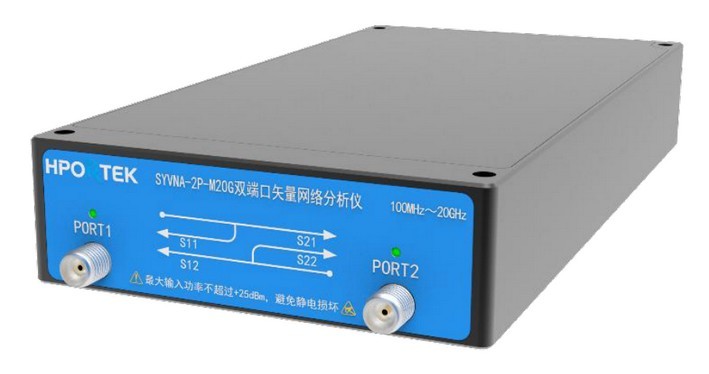
View productThe SYVNA-2P-M20G is a low-cost, high-performance, compact dual-port VNA covering 10 MHz to 20 GHz. It offers bench-level performance…
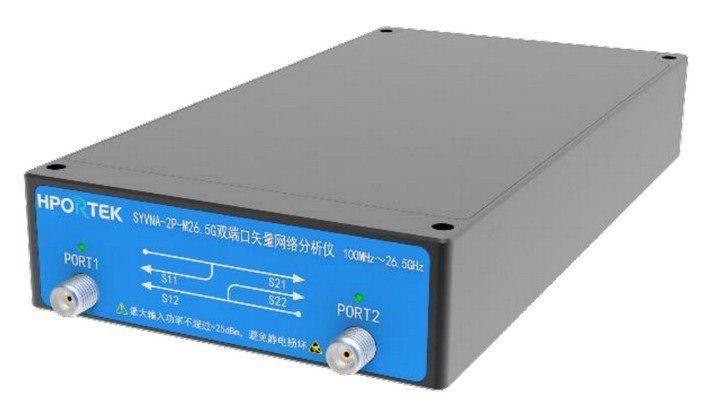
View productThe SYVNA-2P-M26.5G is a compact, low-cost, high-performance modular dual-port VNA covering 100 MHz to 26.5 GHz. Open interfaces support…
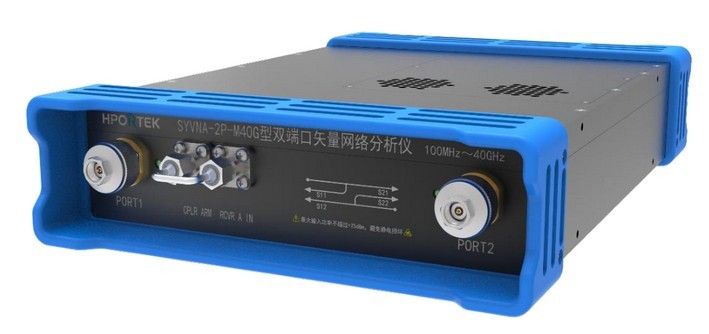
View productThe SYVNA-2P-M40G is a low-cost, high-performance, compact dual-port VNA covering 10 MHz to 40 GHz. It offers bench-level performance…
View productLET’S CONNECT
Talk to our team about your measurement, signal processing, and system integration requirements.